Brown spots, freckles, facial redness and uneven colour can have different causes, and the wrong light-based treatment can worsen pigmentation or delay diagnosis. By the end, you will know which sun-related changes IPL can address, when another treatment is safer, and what to ask before booking care in Panvel.
Key takeaways
- IPL targets brown spots, redness, and uneven colour without removing the skin surface.
- Have every dark or changing spot examined before IPL treatment.
- Choose a chemical peel when surface texture or dullness is the main concern.
- Use strict sun protection after IPL to reduce recurring pigmentation.
Which signs of sun damage can IPL improve?
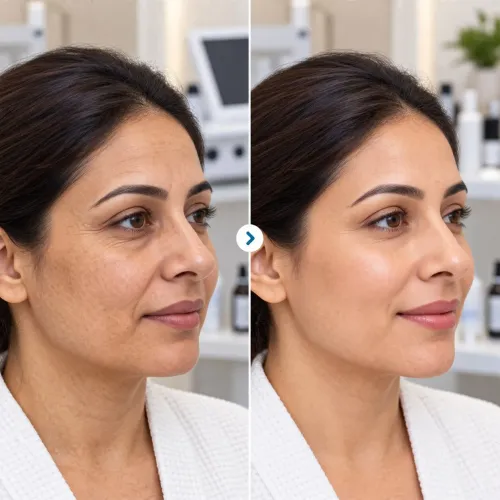
If you are searching “ipl photo facial benefits sun damaged skin panvel,” IPL can improve visible colour changes without removing the skin surface. Filtered broad-spectrum pulses are absorbed by melanin in brown spots and by haemoglobin in superficial vessels, heating these targets while leaving the outer skin intact.
It can target freckles, solar lentigines, brown macules, diffuse redness, small facial vessels and uneven colour. Some roughness linked to photodamage may look better, but IPL does not rebuild collagen lost through ultraviolet exposure. A clearer complexion is not the same as reversing that structural damage.
IPL is not a treatment for skin cancer or actinic keratoses. It is also a poor match for deep wrinkles, pronounced laxity and deep acne scars, which extend beyond its useful depth.
| Option | What it can do | Main trade-off |
|---|---|---|
| IPL | Improves superficial brown and red colour with limited downtime | Limited depth; several sessions may be needed |
| Ablative resurfacing | Removes damaged surface layers and reaches deeper textural concerns | More wound care, recovery and risk |
Compared with aggressive resurfacing, IPL usually offers less peeling and shorter disruption to daily activities. That convenience comes with weaker results for deep texture, scars and lax skin. Continued ultraviolet exposure can create new spots, so sunscreen, protective clothing and shade remain necessary after treatment.
Why a dermatologist must examine every dark or changing spot first
A search for “ipl for sun damage panvel” should begin with diagnosis, not a device setting. Do not treat a lesion that is new, changing, bleeding, crusting, asymmetric, irregular or unusually dark with IPL before a dermatologist examines it.
An undiagnosed lesion can resemble a harmless sun spot; light treatment can delay diagnosis or complicate later assessment.
- The clinician reviews when the mark appeared, whether it has changed, its pattern, borders, colour and surface. A single, sharply defined brown macule that developed after sun exposure may fit a solar lentigo; symmetrical patches suggest melasma, while pigmentation after acne, injury or dermatitis suggests post-inflammatory hyperpigmentation.
- Raised, waxy or rough surface changes can point to seborrheic keratosis. A gritty, scaly area can indicate actinic keratosis, and an asymmetric mark with multiple colours, irregular edges or progressive change requires assessment for skin cancer.
- The dermatologist uses dermoscopy when the surface pattern needs closer inspection and arranges a biopsy when the diagnosis remains uncertain or cancer cannot be excluded. IPL is cosmetic treatment, not a test or treatment for skin cancer.
Melasma can flare with heat and light, so IPL may worsen the very pigmentation you want to reduce. Recent tanning, medium-to-deep brown skin and previous pigment reactions raise the risk of burns or post-inflammatory hyperpigmentation.
Your consultation must also cover photosensitising medicines, active infection or inflammation, abnormal scarring, recent procedures and previous pigment changes; never stop prescribed medicine without the prescriber’s advice.
IPL or a chemical peel: which option fits uneven skin?
IPL suits superficial brown spots and visible red colour; a chemical peel suits controlled exfoliation when the agent and depth match your skin. For ipl treatment for uneven skin panvel, choose by diagnosis rather than by the label “brightening facial.”
| Option | Main action | Better fit |
|---|---|---|
| IPL | Filtered light targets superficial melanin and haemoglobin | Freckles, solar lentigines, diffuse redness and small vessels |
| Chemical peel | Exfoliates with a selected acid at a controlled depth | Surface dullness or pigment when skin sensitivity and pigment risk are assessed |
| Topical treatment | Retinoids support cell turnover; prescribed hydroquinone-based treatment reduces ongoing pigment production | Maintenance or persistent pigmentation under medical supervision |
Pigment depth, sensitive skin, melasma risk, recent tanning, expected downtime and your willingness to complete repeated sessions all affect the choice. IPL usually offers less recovery than ablative resurfacing, but it is less powerful for deep wrinkles, marked laxity and deep scars.
A fractional laser is more appropriate when deeper texture needs remodelling; microneedling can suit selected acne scars or collagen remodelling. Neither replaces daily broad-spectrum sunscreen, shade and protective clothing. Melasma and post-inflammatory pigmentation need diagnosis-led management, not a generic facial protocol.
Do not self-start prescription-strength retinoids or hydroquinone; incorrect use can cause irritation or worsen discolouration. A clinician should also reconsider IPL after recent tanning, since extra melanin raises burn and uneven-pigmentation risk.
What happens during IPL, and how much treatment is involved?
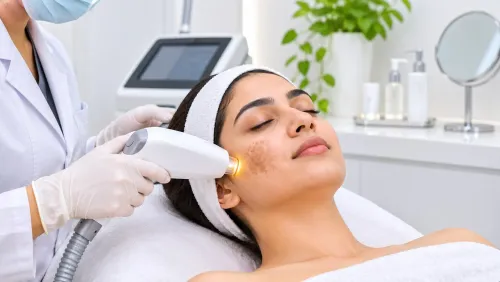
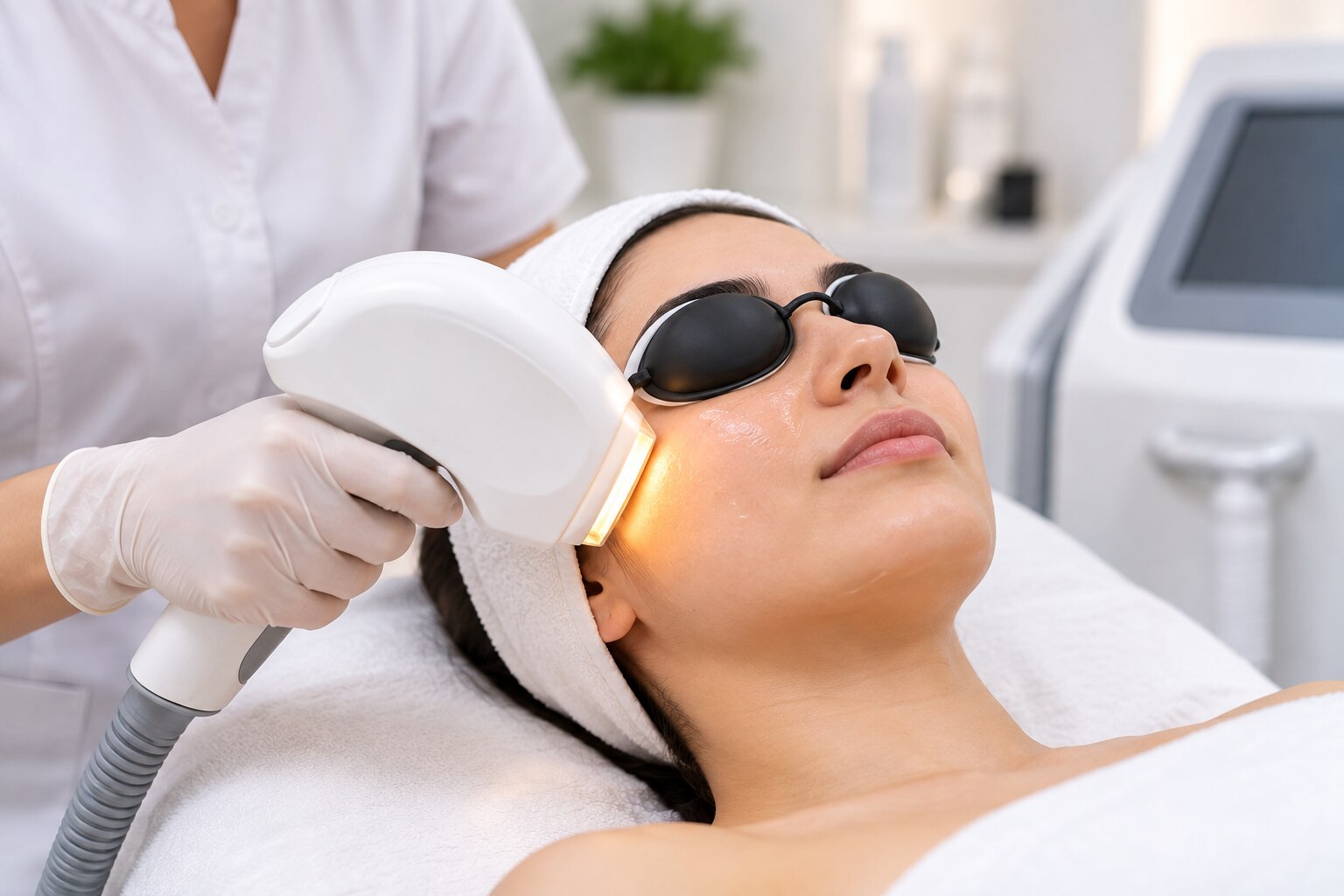
A medically supervised session begins with cleansing, photographs and a baseline assessment of colour, vessels and treatment areas. You receive protective eyewear before cooling gel or contact cooling is applied. The clinician may perform test spots when skin type, recent tanning or pigment risk makes a cautious check appropriate.
The handpiece delivers filtered pulses across the selected area. Each pulse can feel like a quick snap, warmth or a brief sunburn-like sting. Eye protection is essential for you and the operator because IPL emits intense visible and near-infrared light; treatment near the eyes requires extra caution and suitable equipment.
Ask the clinic to confirm these details before booking IPL skin rejuvenation Panvel treatment:
- Expected session duration, including preparation and cooling
- Planned number of treatments and interval between them
- Whether the course is likely to involve about three to six sessions spaced roughly three to six weeks apart
- How the device, filter, fluence, skin type and response could change that plan
Brown spots can darken temporarily before fading. Redness, warmth, swelling and sunburn-like discomfort are common short-term reactions; blistering, burns, prolonged redness, scarring, and temporary or persistent light or dark pigmentation are important risks.
Do not pick darkened spots. Follow the prescribed skin-care plan and protect treated skin from ultraviolet exposure with shade, clothing and sunscreen. Contact the clinic promptly if pain, blistering or worsening pigmentation develops.
How to choose safe IPL care in Panvel and protect the result
A safe booking for IPL for sun damage Panvel starts with the examination, not the offer price. For IPL skin rejuvenation Panvel, ask these questions before paying a deposit:
- Who will examine the pigmentation, and what diagnosis is being treated?
- Which IPL platform and filter are planned for your target, skin type and colour?
- Is a test spot appropriate, and how will its response be reviewed?
- How does recent tanning change the schedule? Treatment may need postponement until the tan fades.
- Who handles follow-up if the pigmentation darkens, burns or worsens?
| Question | A satisfactory answer | Warning sign |
|---|---|---|
| Diagnosis | The clinician identifies a lentigo, redness, melasma or another specific problem and checks suspicious lesions | “Uneven tone” is treated without examination |
| Device plan | The platform, filter, settings approach and expected downtime are explained | A device brand is presented as proof of safety |
| Risk control | Recent tanning, pigment reactions, medicines and alternatives are discussed | The clinic promises results from one session |
| Follow-up | You receive a named contact and review plan for worsening pigmentation | No clear post-treatment pathway |
Dermaatriq is one Panvel option for a consultation under Dr. Swapnalie D. Mange, but suitability depends on assessment rather than clinic name, device brand or low advertised price.
Require daily broad-spectrum sunscreen, protective clothing, shade and no intentional tanning. IPL does not prevent new lentigines or future ultraviolet damage. Proceed only when the clinician has identified the target problem, ruled out suspicious lesions, addressed tanning and pigment risk, and explained alternatives, informed consent, realistic expectations and downtime.
Related service
IPL Photo Facial Treatment IPL (Intense Pulsed Light) Photo Facial is a non-invasive skin rejuvenation treatment designed to improve overall skin tone, clarity, and texture. View service → |
Frequently asked questions
Which signs of sun damage can IPL improve?
IPL can improve visible brown spots, freckles, diffuse uneven colour, and some superficial redness caused by sun exposure. It does not remove deep scars, raised lesions, or every type of pigmentation.
Why must a dermatologist examine every dark or changing spot before IPL?
A dark or changing spot could require diagnosis rather than cosmetic treatment. A dermatologist can decide whether it is safe to treat or needs dermoscopy, monitoring, or biopsy first.
Is IPL or a chemical peel better for uneven skin?
IPL suits uneven colour, brown spots, and some redness. A chemical peel may fit better when dull surface texture, fine superficial lines, or clogged pores are the main concern. A dermatologist can assess your skin tone, sensitivity, and treatment goals.
What happens during IPL, and how much treatment is involved?
The clinician cleans and protects your skin, applies cooling gel, and delivers filtered light pulses. You may need a series of sessions rather than one treatment, with the number based on the extent of pigmentation and your response.
How can you protect IPL results after treatment?
Use broad-spectrum sunscreen with SPF 30 or higher, reapply during outdoor exposure, wear a hat, and avoid deliberate tanning. Follow the clinic’s instructions about heat, active skincare products, and picking treated spots.
Keywords