A small tattoo can require more planning than a larger black design when it contains dense, layered or light-coloured pigment. By comparing surface area, ink colour, pigment depth, skin type and treatment alternatives, you can ask better questions and identify a realistic removal plan before committing to sessions.
Key takeaways
- Small tattoos are not always easier to remove than large, faded designs.
- Match ink colour to the laser wavelength it absorbs before choosing treatment.
- Ask which pigment type, skin risks and tattoo location affect your treatment plan.
- Request a patch test and clear aftercare instructions before booking removal.
Why tattoo size alone cannot predict removal difficulty
A tattoo’s surface area mainly determines how long laser delivery takes and how much skin is treated in one appointment, not how many visits you will need. A small design with dense professional ink, several colours, a cover-up layer, scarring or a difficult location can fade more slowly than a larger, faded amateur tattoo.
Before seeking tattoo removal treatment options, record the details that affect planning:
- Measure the design’s length and width in centimetres.
- Note whether it contains one colour, several colours or layered cover-up ink.
- Record its age and any touch-ups or previous removal attempts.
- Bring clear photographs taken in daylight, without filters or flash glare.
- Identify scarring, raised areas, itching, swelling or unusual sensitivity.
Treatment time means the minutes spent delivering laser pulses. Healing time is the period afterward when redness, swelling, crusting or sensitivity settles. Those are different clocks. Sessions are commonly spaced about 6–8 weeks apart, and the interval becomes longer if the skin has not recovered.
A consultation must assess pigment concentration, ink depth, prior treatment, tattoo location and your skin type before estimating total visits. A search for tattoo removal for small tattoos Panvel should lead to that assessment, not a session count based only on size. A small tattoo is not automatically a one-session treatment.
Match each ink colour to the wavelength it can absorb
Black ink usually responds best to 1064-nm Nd:YAG energy, but coloured tattoo removal requires matching each pigment to the wavelength it absorbs most effectively:
- Black: 1064-nm Nd:YAG is commonly the first choice and often produces the most predictable fading.
- Red, orange and some purple: 532-nm energy commonly targets these warmer pigments.
- Green and blue: 755-nm alexandrite or 694-nm ruby wavelengths may be needed because these colours resist the wavelength used for black ink.
- Yellow: Expect slower fading; available wavelengths are absorbed less effectively by yellow pigment.
- Fluorescent colours: These can also clear slowly and may require careful wavelength selection.
- White, flesh-coloured and pink: Titanium dioxide or iron oxides can turn grey, brown or black after laser exposure.
A multicolour tattoo may therefore need different wavelengths during one treatment course. The clinician might target black sections with 1064 nm, then use 532 nm or another wavelength for coloured sections as the ink lightens; one universal setting cannot address every pigment safely.
Ask for a test spot when the composition is uncertain, especially with cosmetic or flesh-toned ink. Stop and seek review if the test area darkens unexpectedly.
Tattoo removal treatment options depend on pigment chemistry, depth, skin type and equipment—not size alone. A small coloured tattoo is not automatically a one-session treatment, and complete clearance cannot be promised merely because the design is small.
Identify the pigment type before choosing a treatment plan
Pigment history determines treatment more than the tattoo’s dimensions. Identify its depth, density and layers before selecting tattoo removal treatment options.
| Type | Pigment depth and density | Planning concern |
|---|---|---|
| Professional | Concentrated ink at a fairly consistent dermal depth | Dense pigment can require repeated sessions |
| Amateur | Uneven, often shallower deposits | Patchy fading can leave isolated dark marks |
| Cover-up | A second dense layer over the original design | Hidden ink adds depth and prolongs fading |
| Cosmetic | Flesh-toned, pink or mixed pigments | Titanium dioxide and iron oxides can turn grey, brown or black |
| Scar-camouflage | Pigment placed into scar tissue, often with flesh tones | Scar texture and colour change increase uncertainty |
Ask whether the tattoo was touched up, covered, treated before, or linked to itching, swelling or an allergic reaction. This history matters for tattoo removal for small tattoos panvel searches because a tiny cover-up can be harder than a larger faded amateur mark.
Laser is not the only choice. Surgical excision can remove a genuinely small design in one procedure, but it replaces the tattoo with a linear scar. Dermabrasion removes skin layers with unpredictable depth and risks of scarring or pigment change. Camouflage or cover-up tattooing conceals ink rather than removing it and restricts later options.
- Do not use home creams or bleaching products: they cannot selectively reach dermal ink and can burn or scar skin.
Check whether your skin and tattoo location make laser removal suitable
Laser removal is suitable only after a clinician checks the location, age, colours and whether the tattooed skin has scarred. A dense tattoo in a high-friction or sun-exposed site can heal poorly, while stretching can disturb crusted skin.
- Disclose any keloid or hypertrophic-scar history, tattoo allergy, active infection, eczema or open skin.
- Report recent tanning, previous laser treatment, and every medication or supplement that affects healing or photosensitivity.
- For darker skin phototypes, ask how epidermal melanin will be protected; absorbed energy can cause burns, temporary light spots or darkening.
- Ask whether a conservative test spot and longer-wavelength 1064-nm Nd:YAG treatment are appropriate. The wavelength is often favoured for darker skin, but settings still require care.
Picosecond and Q-switched nanosecond systems both fragment ink with short pulses. Neither label guarantees better results.
| System | Useful comparison | What determines suitability |
|---|---|---|
| Picosecond | Very short pulses; useful for some resistant pigments | Wavelengths available, ink depth, pigment chemistry and settings |
| Q-switched nanosecond | Established short-pulse approach for many inks | Skin type, colour, depth and operator technique |
The device name matters less than the proposed wavelength and plan. Ask for tattoo removal treatment options based on your skin and pigment, not advertising. A search for dermatologist tattoo removal panvel should lead to documented screening, not a promise based on size alone.
Know what to ask at a Panvel consultation before booking
A sound Panvel consultation starts with an examination, not a session estimate. The clinician should inspect the tattoo and surrounding skin, record its colours, layers, location, age and previous treatment, review your medical history, photograph the area in consistent lighting, and explain whether a test patch is appropriate.
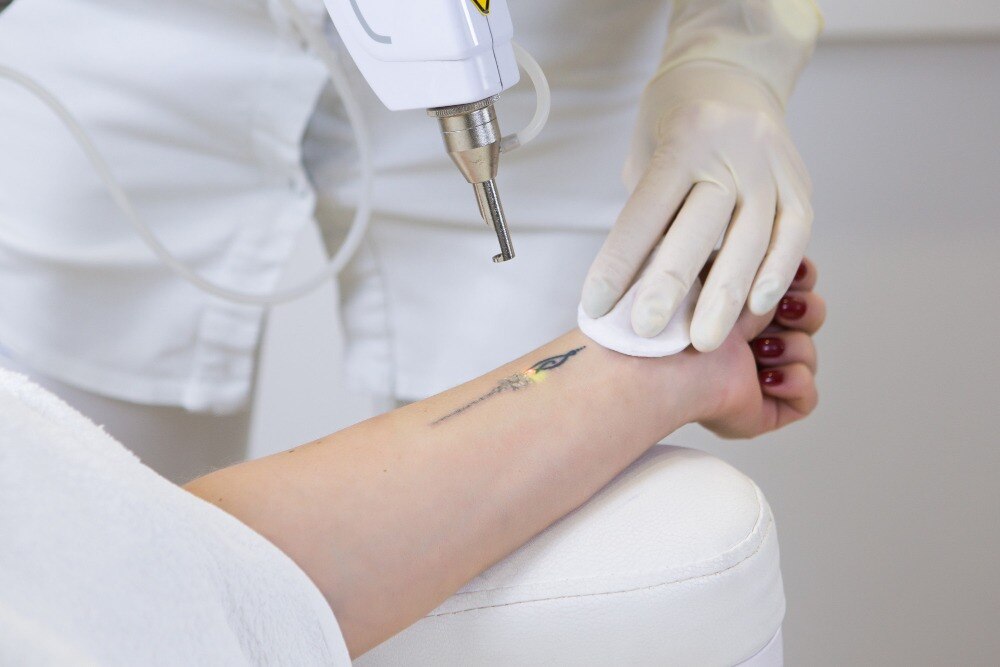
During treatment, wavelength-specific eye protection is essential; expect brief stinging or snapping. You should leave with instructions for gentle cleansing, prescribed wound care and strict sun protection, plus restrictions on picking, friction, swimming and heavy sweating until the skin heals.
| Consultation detail | What a useful plan records | Warning sign |
|---|---|---|
| Colour and layers | Wavelength matched to each pigment and cover-up layer | One setting promised for every colour |
| Skin and medical history | Tanning, infection, scarring, allergy, medicines and photosensitivity | Screening skipped |
| Test patch | Reason for testing or treating directly | White, cosmetic or uncertain pigment ignored |
| Recovery | Healing checks, spacing and possible pigment or texture change | Guaranteed session count |
Ask these questions before booking:
- Which wavelength will target each colour, and why?
- What finding would delay treatment?
- How far apart will sessions be spaced?
- Could residual pigment, lighter or darker skin, or texture change remain?
- How would you handle delayed itching, swelling or an allergic reaction?
For searches such as tattoo removal for options panvel, tattoo removal for small tattoos panvel or dermatologist tattoo removal panvel, compare whether Dermaatriq or another provider documents these factors rather than judging size alone. The useful result is a written, realistic plan.
Related service
Tattoo Removal Treatment At Dermaatriq Clinic, we offer advanced and safe tattoo removal treatments under the expert guidance of Dr. Swapnalie D. Mange. View service → |
Frequently asked questions
Does tattoo size determine how difficult removal will be?
Size mainly affects treatment time and the amount of skin treated per appointment. Ink density, colour, cover-up layers, scarring and location also affect fading and visit requirements.
Which laser wavelength is used for coloured tattoos?
The wavelength must match the ink’s absorption. Black ink responds well to 1,064 nm Nd:YAG light, while green, blue and some purple inks may require 755 nm alexandrite or 694 nm ruby light. Red, orange and yellow pigments often respond to 532 nm light.
Why must the pigment type be identified before tattoo removal?
Professional, amateur, cosmetic and cover-up pigments contain different materials and concentrations. Pigment type affects response, treatment settings and the risk of colour change or scarring.
When might laser tattoo removal be unsuitable?
A clinician must assess your skin tone, tanning, history of keloid scars, active infection, tattoo scarring and location before treatment. These factors can increase burns, pigment changes or delayed healing.
What should you ask during a tattoo removal consultation in Panvel?
Ask which laser and wavelength will be used, how pigment and skin type affect risk, whether a patch test is needed, expected appointment spacing, aftercare and signs requiring medical review.
Keywords