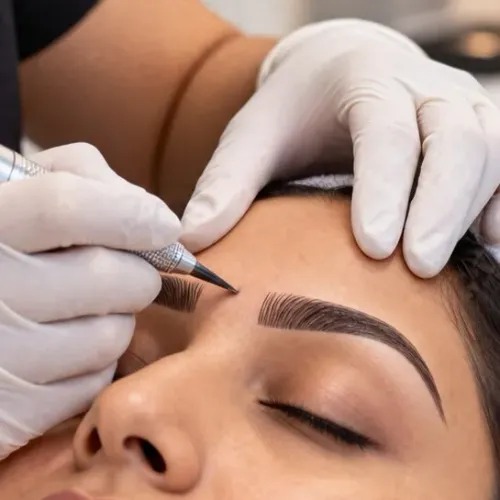
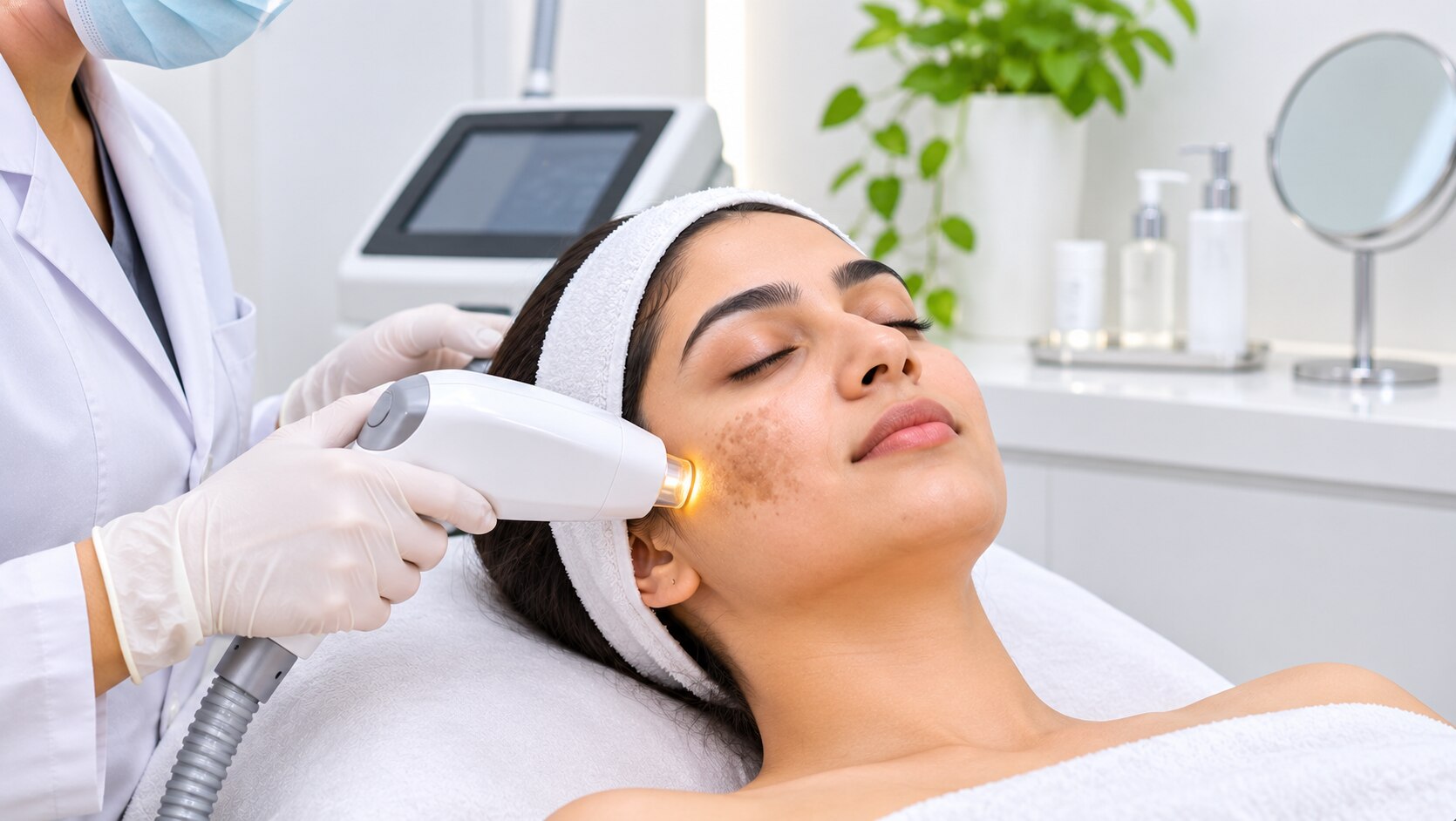
Sensitive skin does not automatically rule out pigmentation treatment, but burning, flaking, eczema, recent tanning and a damaged barrier change the safest starting point. You will learn how to identify the type of pigmentation, prepare your skin, compare treatment options and recognise when treatment should be postponed or reviewed by a dermatologist.
Key takeaways
- Treat eczema, dermatitis, burning, scaling, and barrier damage before pigmentation treatment.
- Confirm whether dark spots are melasma, post-inflammatory pigmentation, or another diagnosis.
- Start with gentle skincare and low-intensity treatment when sensitive skin is stable.
- Ask how treatment intensity, patch testing, sunscreen, and recovery will be managed.
Sensitive skin is treatable, but active irritation comes first
Stinging, flushing, peeling or reactive skin does not automatically rule out pigmentation treatment, but active irritation comes first. A dermatologist should control eczema, dermatitis, burning, scaling or a damaged skin barrier before starting retinoids, bleaching agents, chemical peels, IPL or laser procedures. Treating inflamed skin too soon can worsen irritation and create more post-inflammatory hyperpigmentation.
A consultation should establish what the darkening actually is:
- Melasma, which often relapses and can worsen with ultraviolet and visible light
- Post-inflammatory hyperpigmentation after acne, eczema, burns or product reactions
- Acne-related marks or sun spots
- Drug-related pigmentation
- A melanocytic lesion or another mark that needs separate medical evaluation
“Sensitive skin” describes how your skin reacts; it does not identify the cause or predict which procedure is safe. That is why anti pigmentation treatment for sensitive skin Panvel should begin with an examination, medication review, pregnancy or breastfeeding history, recent sun exposure and previous reactions to acids, retinoids, IPL or lasers.
Daily broad-spectrum sunscreen is the foundation, not an optional add-on. For melasma, tinted sunscreen containing iron oxides can add visible-light protection; barrier-repair skincare may also be needed before active treatment. Azelaic acid is sometimes chosen when acne, rosacea and pigmentation overlap, but it can still sting, so a dermatologist may introduce it gradually.
If your face currently burns or peels, postpone cosmetic procedures until the skin is calm.
The diagnosis determines whether pigmentation treatment is appropriate
A dermatologist decides suitability by identifying what caused the colour, not by judging whether your skin feels sensitive. The assessment includes the pattern and location of pigmentation, recent inflammation, sun exposure, medicines, pregnancy or breastfeeding, current redness or eczema, and previous reactions to acids, retinoids, peels, IPL or lasers.
Dermoscopy can help separate a flat pigment mark from a melanocytic lesion that needs different evaluation.
The common diagnoses lead to different plans:
- Melasma usually appears as fairly symmetrical brown patches on the cheeks, forehead, upper lip or jaw. Melasma sensitive skin treatment Panvel should be approached as long-term control, not a permanent cure; recurrence is common without ongoing sun protection and tolerable maintenance treatment.
- Post-inflammatory hyperpigmentation follows acne, eczema, burns, picking or a rash. Treating the inflammation first prevents new darkening.
- Acne marks are flat brown or grey areas left after spots heal, while raised or indented scars require a different discussion.
- Drug-related pigmentation needs a medication review before any cosmetic procedure. Do not stop a prescribed medicine without the prescriber’s advice.
- A sun spot or melanocytic lesion needs examination before lightening treatment. A rapidly changing, asymmetric, bleeding, ulcerated mark, or one unlike the others should not be treated as an ordinary dark spot.
People searching for dark spots sensitive skin Panvel should ask for a diagnosis before choosing a cream or procedure. Daily broad-spectrum sunscreen, including tinted iron-oxide protection when melasma is suspected, supports treatment but does not replace examination.
Which options are gentlest for sensitive skin?
Sunscreen and barrier repair are the gentlest starting points; procedures come later, if needed. A pigmentation treatment plan for sensitive skin in Panvel should match the diagnosis, skin tone and history of reactions rather than promise the strongest possible peeling or light device.
| Option | Sensitivity profile | Practical role |
|---|---|---|
| Broad-spectrum sunscreen | Lowest irritation risk; tinted formulas with iron oxides also reduce visible-light exposure | Daily foundation, especially for melasma |
| Barrier repair | Usually gentle; fragranced products can sting | Restore tolerance with a bland moisturiser and gentle cleanser |
| Azelaic acid | Often better tolerated than stronger bleaching agents; can still sting | Acne marks, post-inflammatory pigmentation and melasma |
| Hydroquinone | Effective but can irritate or cause dermatitis | Short, dermatologist-prescribed courses |
| Retinoids | Commonly cause dryness, burning and peeling | Gradual night use when skin has regained tolerance |
| Gentle chemical peels | Acid strength and contact time determine risk | Selected cases; over-treatment can deepen pigmentation |
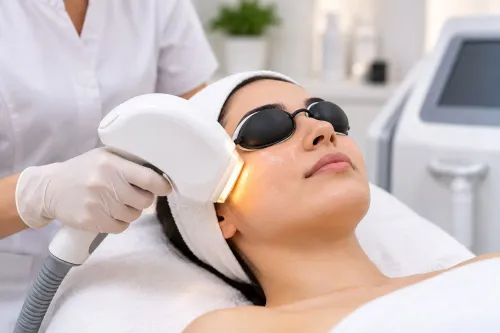
| IPL | Heat can trigger burns or post-inflammatory hyperpigmentation | Only after diagnosis and a cautious test spot |
| Laser procedures | Device and settings matter; pigment lasers are not automatically safer | Resistant or defined lesions under specialist supervision |
Azelaic acid is often the next topical considered after sunscreen and barrier care. Hydroquinone and retinoids need slower schedules, such as alternate nights or short contact, and burning is a warning—not proof of effectiveness. Peels, IPL and lasers carry more irritation and pigmentation risk, particularly after recent sun exposure.
A dermatologist should choose them only when the expected benefit justifies recovery.
How treatment intensity and recovery are controlled
Start with the lowest effective intensity, and postpone treatment until burning, eczema, peeling or barrier damage has settled. Ongoing inflammation can deepen post-inflammatory hyperpigmentation, even after the original trigger disappears.
A safe plan follows a staged process:
- Use a gentle cleanser, moisturiser and broad-spectrum sunscreen every day before treatment. For melasma, choose a tinted sunscreen containing iron oxides because visible light can worsen uneven pigmentation.
- Introduce a prescribed topical on a small area or at low frequency before applying it more widely. Azelaic acid can still sting, so stop and contact your dermatologist if burning persists.
- Use conservative settings for peels, microneedling, IPL or lasers. A test spot and a suitable interval between sessions reduce the chance of a widespread reaction.
- Avoid scrubs, waxing, fragranced products and unapproved bleaching creams during recovery. Do not pick peeling skin.
For anti pigmentation treatment for sensitive skin Panvel, ask for written aftercare: when to restart retinoids or acids, which moisturiser to use, and how long to avoid heat and direct sun. Increasing redness, swelling, blistering, pus or worsening darkening needs prompt review.
A melasma sensitive skin treatment Panvel plan focuses on control, not a permanent cure. Continue sunscreen and a tolerable maintenance topical after improvement, because recurrence is common.
What to discuss at a Panvel dermatology consultation
Bring photographs of how the pigmentation started, your current skincare list, prescription medicines, and details of previous reactions. Tell the dermatologist about stinging, flushing, peeling, eczema, recent sun exposure, pregnancy or breastfeeding, keloid scars, and reactions to acids, retinoids, IPL, or lasers.
Ask these questions before choosing pigmentation treatment sensitive skin panvel:
- Is this melasma, post-inflammatory hyperpigmentation, acne marks, drug-related pigmentation, a sun spot, or a melanocytic lesion?
- Does any rapidly changing, asymmetric, bleeding, ulcerated, or unusual mark need examination instead of cosmetic treatment?
- Is my skin barrier calm enough to begin, and what happens if burning or darkening develops?
- What sunscreen, reapplication schedule, patch test, and maintenance plan will I need?
- How many sessions or weeks are expected, and what is the plan if pigmentation returns?
| Option | What to clarify | When it may fit |
|---|---|---|
| Sunscreen and barrier repair | Daily broad-spectrum protection and gentle moisturising | Irritated or treatment-sensitive skin |
| Azelaic acid | Strength, frequency, and irritation plan | Marks with acne or redness |
| Hydroquinone or retinoid | Prescription need and pregnancy restrictions | Selected cases after assessment |
| Peel, IPL, or laser | Test spot, settings, downtime, and post-inflammatory pigmentation risk | Stable skin with a specific diagnosis |
For dark spots sensitive skin panvel searches, Dermaatriq can be asked how diagnosis and test-spot decisions are made before any procedure. A consultation should prioritise suitability over the availability of IPL or peels.
Related services
Anti-Pigmentation Treatment At Dermaatriq Clinic, our Advanced Anti-Pigmentation Treatment is designed to effectively target and reduce dark spots, uneven skin tone, melasma,... View service → |
IPL Photo Facial Treatment IPL (Intense Pulsed Light) Photo Facial is a non-invasive skin rejuvenation treatment designed to improve overall skin tone, clarity, and texture. View service → |
Frequently asked questions
Can sensitive skin receive pigmentation treatment?
Yes, but active eczema, dermatitis, burning, scaling, or barrier damage should be controlled first. Treating irritated skin too soon can worsen inflammation and post-inflammatory hyperpigmentation.
Why does the diagnosis matter before treating dark spots?
Melasma, post-inflammatory hyperpigmentation, and other causes need different treatment plans. A dermatologist should identify the cause before selecting creams, peels, IPL, or laser procedures.
Which pigmentation treatments are gentlest for sensitive skin?
A dermatologist may begin with gentle skincare and carefully selected topical ingredients after the skin barrier is stable. Stronger options, including retinoids, bleaching agents, chemical peels, IPL, and lasers, require individual assessment.
How is treatment intensity controlled for sensitive skin?
A dermatologist can adjust the product strength, treatment interval, and procedure settings, then plan sunscreen use and recovery care. Patch testing and gradual treatment help identify irritation before a larger treatment area is exposed.
What should you discuss at a Panvel dermatology consultation?
Tell the dermatologist about stinging, flushing, peeling, previous reactions, current products, medicines, pregnancy, and sun exposure. Ask for the diagnosis, treatment alternatives, expected recovery, irritation warning signs, and sun-protection plan.
Related service
Chemical Peel Treatment At Dermaatriq Clinic, Chemical Peel treatment under the expert care of Dr. Swapnalie D. View service → |
Keywords