Hair shedding can affect how you prepare for meetings, manage your appearance and feel during a demanding workday, but different patterns need different treatment. By the end, you will know which warning signs need prompt dermatology care, what a consultation involves, and how to compare options by results, maintenance and disruption to your schedule.
Key takeaways
- Hair shedding after illness or stress often starts two to three months after the trigger.
- Ask about blood tests when symptoms suggest iron deficiency, thyroid disease or nutritional problems.
- Compare treatment downtime, visit frequency, side effects and evidence before choosing a procedure.
- Choose a dermatologist who examines your scalp before recommending medication or hair restoration.
How can you tell whether work-related hair fall is temporary or progressive?
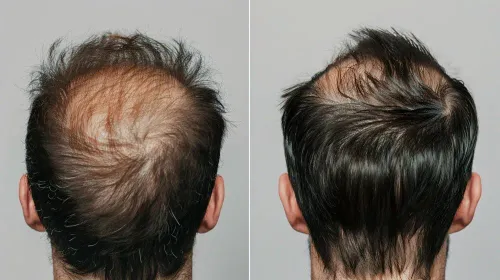
Some daily shedding is normal, but a clear increase after a trigger points to telogen effluvium. It often begins 2–3 months after fever, major illness, surgery, rapid weight loss, severe stress or childbirth, then improves over several months once the trigger is addressed.
| Pattern | What you notice | What it suggests |
|---|---|---|
| Telogen effluvium | Diffuse shedding across the scalp after a delay | Temporary hair-cycle disruption |
| Androgenetic alopecia | Gradual temple recession, crown thinning or a widening part | Progressive pattern loss; early treatment helps preserve follicles |
| Breakage | Short snapped hairs, uneven lengths or rough ends | Heat, chemicals, tight styles or shaft damage rather than follicle loss |
| Alopecia areata or scarring loss | Smooth patches, or shiny skin without follicle openings | Immune or inflammatory disease needing prompt assessment |
Arrange prompt review for eyebrow or eyelash loss, scalp pain, burning, pustules, redness, heavy scaling or rapid shedding lasting more than a few weeks. Shiny areas without visible follicle openings can indicate scarring alopecia, which can permanently destroy follicles.
A dermatologist hair fall treatment Panvel appointment can distinguish these patterns and investigate causes needing different management, including thyroid disease, iron deficiency, medication-related shedding and infection. Bring a list of medicines, recent illnesses and supplements; diagnosis prevents you from treating temporary shedding like pattern loss or delaying care for inflammation.
What happens during a hair-loss consultation, and which tests might you need?
A focused first visit can identify the likely cause without consuming your workday. The clinician will ask when shedding began, whether it is diffuse or patchy, recent fever or illness, surgery, stress, weight change, diet, menstrual or pregnancy history where relevant, family history, medicines, supplements, and styling or chemical treatments.
The examination may include scalp inspection, a hair-pull test, baseline photographs and trichoscopy. This magnified assessment shows follicle openings, shaft thickness and inflammation, helping separate telogen effluvium, pattern loss, alopecia areata and scarring conditions.
| Test | When it fits | How it changes care |
|---|---|---|
| Complete blood count and ferritin | Suspected anaemia or iron deficiency | Correct the deficiency rather than treating shedding blindly |
| Thyroid testing | Symptoms or examination findings suggesting thyroid disease | Treat the thyroid problem contributing to hair loss |
| Hormone testing | Irregular periods, excess facial hair or other androgen-related features | Investigate hormonal causes before selecting treatment |
| No blood panel | History and examination clearly indicate a hair-loss pattern | Avoids unnecessary tests, expense and delay |
For hair loss treatment for working adults in Panvel, diagnosis determines the plan: correcting a trigger in telogen effluvium, treating scalp inflammation, or stabilising pattern loss. A delayed hair-cycle response cannot be reversed overnight by medication; shedding after an illness or major stressor can take several months to settle after the trigger is addressed.
Which treatment options fit meetings, commuting and limited recovery time?
Meeting-heavy work favours treatments you can sustain without visible recovery, repeated travel or unpredictable side effects. A search for hair fall treatment for professionals Panvel workers can use this practical comparison:
| Option | Practical burden | Office impact |
|---|---|---|
| Topical minoxidil | Apply consistently at home for several months; continue to maintain benefit | No downtime, but early shedding or scalp irritation can show |
| Oral finasteride | Long-term prescription for appropriate men with pattern loss | No procedure; discuss sexual and mood-related effects. Women who are pregnant or may become pregnant must not handle crushed or broken tablets |
| Spironolactone | Selected women need pregnancy, blood-pressure, kidney-function, potassium-risk and interaction review | No procedure, but monitoring and dose changes can affect routine |
| Low-dose oral minoxidil | Off-label; requires selection and monitoring | Dizziness, ankle swelling, fast heartbeat or excess facial and body hair can disrupt work |
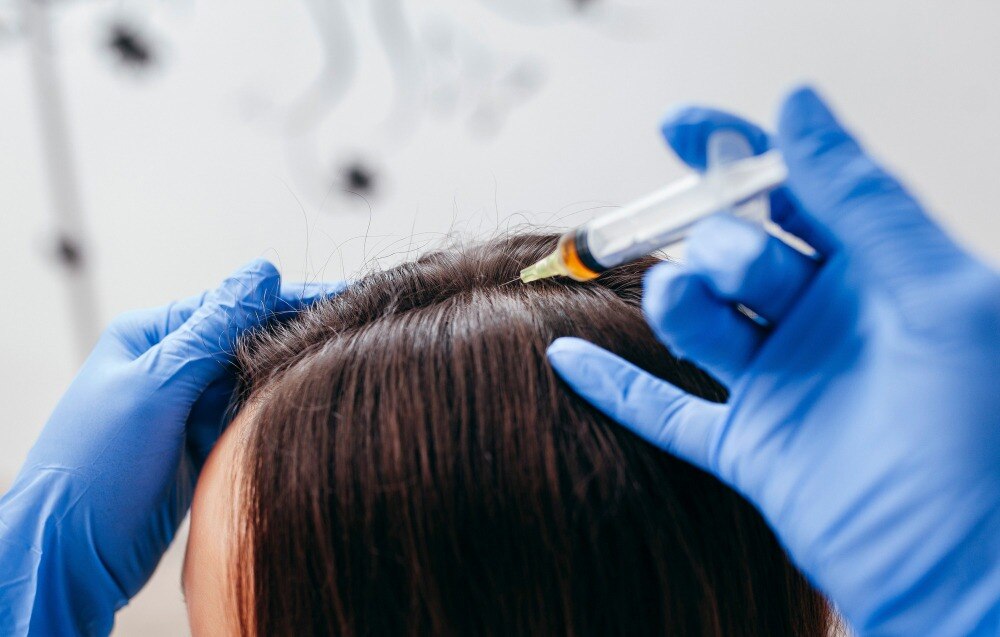
| PRP | Repeated appointments over months; evidence varies | Brief tenderness or swelling can be visible after injections |
| Transplant | Requires donor assessment and medical stabilisation first | Redness and scabs can last about 7–14 days; it redistributes follicles and does not stop native-hair thinning |
Supplements mainly help when testing confirms a deficiency. High-dose biotin can distort thyroid and cardiac test results, so disclose it before bloodwork.
Choose around your calendar: topical treatment has the lowest travel burden, PRP needs recurring visits, and transplant demands planned downtime plus long-term maintenance for remaining hair. Loss that is sudden, painful or patchy needs diagnosis before convenience determines treatment.
How can effective treatment make a working day easier?
Effective treatment can make your working day easier by reducing excessive shedding, so fewer hairs collect on clothing, desks and pillows. Preserving existing density can also reduce the need to conceal a widening part or receding hairline before client meetings.
These are practical hair fall treatment benefits for working professionals in Panvel, not promises of instant regrowth.
Confidence improves when your expectations match the hair cycle:
- Early treatment may focus on reducing shedding and protecting follicles. Visible density gains usually take several months, so do not judge progress after two weeks.
- Apply a prescribed topical treatment after your final shower if that timing fits your commute and evening routine. Use calendar reminders rather than switching products repeatedly.
- Schedule follow-up visits on low-meeting days, especially when the plan requires monitoring, dose changes or assessment of scalp irritation.
A stable regimen can reduce time spent changing hairstyles, applying fibres or searching for salon and online remedies. Avoid high-dose biotin and mixed supplements unless testing identifies a deficiency; excess biotin can interfere with thyroid and cardiac blood tests.
Seek prompt review instead of concealing sudden smooth patches, pain, burning, heavy scaling, pustules or shiny scar-like areas. Convenience affects adherence: a correct plan that fits office life is easier to continue than a theoretically stronger treatment abandoned because of irritation, monitoring or appointment demands.
What should you compare before choosing a Panvel dermatologist?
Choose a clinic that can explain both the diagnosis and the workload of treatment. For hair fall treatment for professionals Panvel readers should compare whether the plan fits commuting, meetings and follow-up visits, not just whether it promises regrowth.
| Check | Ask before booking | Why it matters |
|---|---|---|
| Consultation | Does it include scalp examination, hair-pull testing, photographs or trichoscopy? | These findings separate shedding, pattern loss, inflammation and scarring. |
| Medicines | Are health conditions, current medicines, supplements and drug interactions reviewed first? | The wrong prescription can create avoidable side effects or risks. |
| Progress | Will follow-up photographs or density checks measure change? | Memory and daily mirror checks cannot reliably show gradual improvement. |
| Practical burden | How often are appointments needed, what visible downtime applies, and what maintenance continues? | A manageable routine is easier to follow around office commitments. |
| Transplant advice | When would donor assessment or medical stabilisation make a transplant reasonable? | A transplant redistributes follicles; it does not stop untreated native-hair thinning. |
A dermatologist hair fall treatment Panvel consultation should also address sudden patches, inflammation, pain, pustules, heavy scaling or shiny skin without follicle openings. Ask how urgently these findings are assessed. Dermaatriq is one Panvel option to evaluate against this same checklist, not evidence that a particular treatment will work.
Ask which outcome is realistic:
- Less shedding
- Preservation of existing follicles
- Improved density
- Restoration only where follicles have been permanently lost
Reject guaranteed regrowth, instant results and one-treatment-fits-all claims.
Related services
Hair Fall Treatment At Dermaatriq Clinic, we understand that hair fall can affect both your confidence and overall well-being. Under the expert guidance of Dr. View service → |
Hair Regrowth Treatment At Dermaatriq Clinic, our Hair Regrowth Treatment is a scientifically designed, medically supervised solution aimed at addressing various types of... View service → |
Frequently asked questions
How can you tell whether work-related hair fall is temporary or progressive?
Telogen effluvium often begins two to three months after fever, illness, surgery, rapid weight loss, severe stress or childbirth. A dermatologist can assess whether shedding is recovering or whether signs point to progressive pattern hair loss.
What happens during a hair-loss consultation, and which tests might you need?
The consultation includes a history of shedding, recent health changes, medicines, diet and family pattern, followed by scalp and hair examination. Depending on your symptoms, the dermatologist may request tests such as a complete blood count, ferritin, thyroid-stimulating hormone, vitamin B12 or vitamin D.
Which treatment options fit meetings, commuting and limited recovery time?
Topical or oral medicines can fit regular work schedules, while procedures require comparison of appointment length, scalp tenderness, visible redness and aftercare. Your dermatologist should match the option to your diagnosis and available recovery time.
What should you compare before choosing a Panvel dermatologist?
Compare medical assessment, treatment explanation, follow-up access, transparent costs, expected downtime and how complications are handled. Choose a clinic that recommends treatment after diagnosis rather than promising one solution for every type of hair loss.
Related services
Hair Transplant Treatment Hair Transplant at Dermaatriq Clinic is a safe, advanced, and minimally invasive procedure designed to restore natural hair growth in areas affected... View service → |
Skin & Hair PRP Treatment PRP (Platelet-Rich Plasma) is a natural, non-surgical treatment that uses the patient’s own blood to rejuvenate skin and promote hair growth. View service → |
Keywords