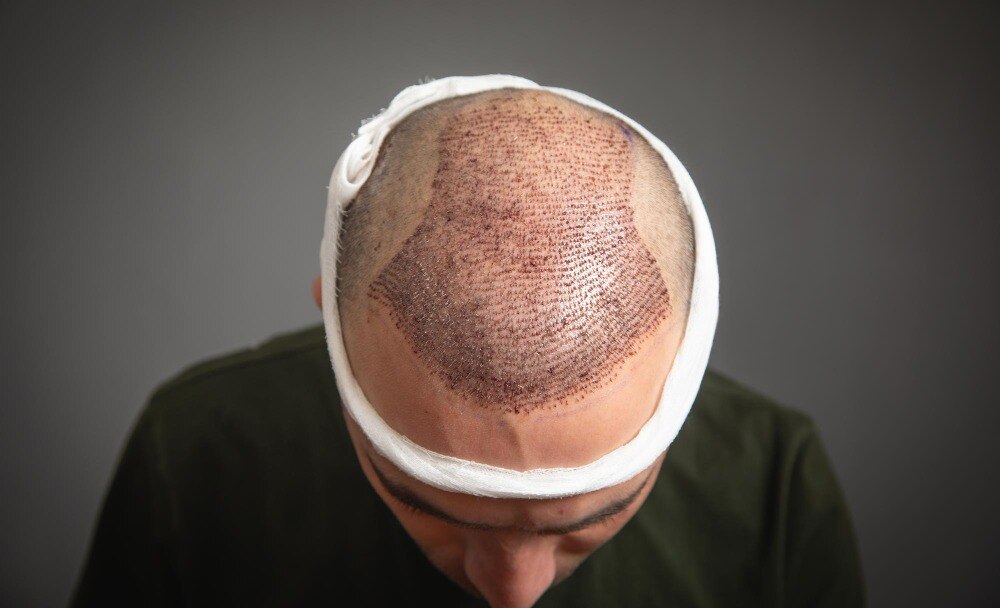
A receding front hairline is not always pattern baldness, and transplanting it before confirming the cause can waste limited donor follicles. You will learn how to identify the type of hairline loss, judge whether surgery is appropriate, compare FUE with FUT, and assess a treatment plan in Panvel without relying on guarantees or fixed graft numbers.
Key takeaways
- Separate a stable mature hairline from active recession before choosing treatment.
- Confirm donor density and future hair loss before estimating graft numbers.
- Compare FUE and FUT by scarring, recovery, graft yield, and cost.
- Plan for gradual growth, with visible results developing over several months.
Is your hairline receding, maturing, or thinning for another reason?
A mature adult hairline usually forms a stable, slight M shape without ongoing density loss. Active frontal recession moves backward over time, while temporal-point loss removes the side corners and deepens the M.
| Pattern | Clues |
|---|---|
| Mature adult hairline | Stable position, even density, no progressive miniaturisation |
| Active frontal recession | Thinner, finer hairs behind the edge; recession visible in serial photographs |
| Diffuse thinning | Reduced density across the front, crown, or entire scalp rather than a shifting border |
| Naturally high hairline | High but evenly dense hairline that has not changed |
| Traction loss | Broken hairs, tenderness, or thinning along areas pulled by tight braids, ponytails, extensions, or headwear |
Androgenetic alopecia and family history commonly drive progressive loss. Other causes include inflammatory scalp disease, alopecia areata, frontal fibrosing alopecia, scalp infection, scarring alopecia, tight hairstyles, and medication-related shedding. Sudden or patchy loss, smooth bald patches, pain, itching, scaling, or redness needs prompt assessment because scarring or active inflammation can permanently destroy follicles.
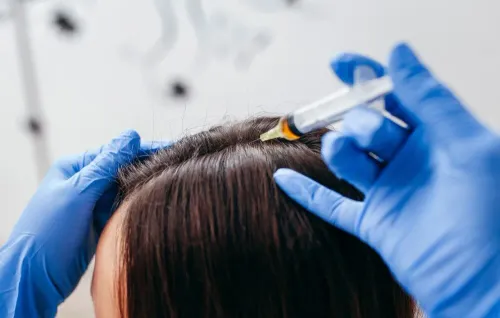
A proper receding hairline treatment panvel consultation should include scalp examination, density measurement, trichoscopy or dermoscopy, a pull test when indicated, and medical and medication history. Blood tests help when symptoms suggest iron deficiency, thyroid disease, or another systemic disorder; a scalp biopsy is appropriate when scarring or an uncertain diagnosis is suspected.
When is a hair transplant suitable for a receding hairline?
Surgery is suitable when hair loss has a confirmed, stable cause, the donor zone has enough permanent follicles, and your expectations match a finite supply of grafts. A hair transplant for hairline loss redistributes existing follicles; it cannot create new donor hair or stop miniaturisation in untreated native hair.
Delay surgery and seek medical treatment first if you have:
- Ongoing rapid recession or diffuse thinning
- Unstable alopecia, including recent patchy loss
- Active scalp inflammation or infection
- Scarring disease that is destroying follicles
- Inadequate donor density or an unstable donor zone
- Expectations of a dense, permanently low hairline regardless of future loss
Stabilisation can include topical minoxidil or a prescription anti-androgen when clinically appropriate. Minoxidil can irritate the scalp and cause unwanted facial hair. Oral finasteride carries sexual and psychiatric warnings and has pregnancy-related restrictions; discuss individual risks with a qualified clinician rather than buying a package labelled receding hairline treatment panvel.
Your assessment should consider age, family history, facial proportions, likely future recession, donor density, hair calibre, curl, scalp laxity, and previous surgery. A young patient with strong family-pattern recession may need years of conservation before surgery. Prior procedures can reduce donor supply and complicate repair.
Choose transplantation only when diagnosis, medical stability, donor reserves, and a conservative long-term design all support it.
How should the surgeon design the hairline and estimate grafts?
A graft is a follicular unit containing one or more hairs, not one hair. Because units vary, 1,000 grafts might contain far more than 1,000 hairs; graft counts cannot be converted directly into hair counts.
The estimate depends on hairline width, desired density, hair calibre, curl, scalp-to-hair contrast, existing native hair, donor supply and the likely future hairline. Coarse, curly, low-contrast hair can create coverage with fewer grafts, while fine, straight hair against a pale scalp usually needs more.
A surgeon must also measure donor density, assess donor-zone stability and preserve follicles for later recession.
The front edge should use mainly single-hair units, followed by progressively larger units behind it. Small irregularities look natural; a ruler-straight border does not. An aggressively low hairline in a young patient can consume finite donor follicles and look increasingly unnatural as recession continues.
For a hair transplant for receding hairlines in Panvel, ask for these details before accepting a package number:
- The planned graft range and the expected density, with an explanation of how hair calibre and native hair affected the estimate.
- The donor-density findings, usable donor area and the number of follicles reserved for possible future loss.
- The proposed future-loss strategy if native hair continues to thin, including medical stabilisation and follow-up.
- The person responsible for diagnosis, design, extraction and recipient-site creation.
- What happens if the result grows unevenly or native recession continues, rather than accepting a fixed hair restoration Panvel package.
FUE or FUT: what happens during the procedure and what should you compare?
FUE removes follicular units individually through small punches; FUT removes a strip of scalp and separates it into grafts. Neither is scarless: FUE can leave visible hypopigmented or widened punctate scars, while FUT leaves a linear scar. FUT can preserve more donor tissue for selected patients.
| Option | FUE | FUT |
|---|---|---|
| Shaving | Full or partial donor shaving is common | Donor strip can often be removed with less visible shaving |
| Time and handling | Longer extraction; each graft needs careful sorting and protection | Faster harvesting, with strip dissection and less repeated punch trauma |
| Donor area | Suits adequate density and tight, short-hairstyle tolerance | Suits patients with good scalp laxity and a hairstyle covering the line |
| Prior surgery | Useful after a previous strip scar, depending on reserve | May suit a patient with no strip surgery and enough laxity |
| Recovery | Small wounds, quicker visible donor healing | Sutures or staples, more tightness and a longer linear-wound recovery |
The practical sequence is:
- Design a conservative, irregular hairline, prepare the donor area, and administer local anaesthesia.
- Extract grafts, keep them hydrated and chilled as directed by the surgical team, then create recipient sites at the planned angle and direction.
- Place grafts carefully, apply a dressing, and give written washing, medication, activity, and warning-sign instructions before discharge.
Ask any hair transplant clinic Panvel who performs diagnosis, design, extraction, site creation, and placement. For hair transplant for receding hairline Panvel, compare written risks and graft-handling plans, not technique labels or price. A consultation at Dermaatriq can be assessed by these same questions.
Related services
Hair Transplant Treatment Hair Transplant at Dermaatriq Clinic is a safe, advanced, and minimally invasive procedure designed to restore natural hair growth in areas affected... View service → |
Hair Regrowth Treatment At Dermaatriq Clinic, our Hair Regrowth Treatment is a scientifically designed, medically supervised solution aimed at addressing various types of... View service → |
What recovery, growth, risks, and aftercare should you expect?
Most transplanted hairs shed within the first few weeks, so the early appearance is not the result. New growth commonly begins around three to four months, while the cosmetic result continues maturing for roughly nine to twelve months.
| Stage | What to expect |
|---|---|
| Early healing | Swelling, crusting, tenderness, and visible shedding |
| Three to four months | New hairs commonly begin emerging |
| Nine to twelve months | Density and texture continue maturing |
Shock loss can temporarily shed nearby native hair. It may recover, but it can also reveal continuing untreated pattern loss, so discuss medical treatment and long-term reviews.
Before consent, discuss bleeding, infection, folliculitis, cysts, numbness, poor growth, unnatural angulation, over-harvesting, and an artificial or pluggy hairline. FUE can leave pale or widened dot scars; FUT leaves a linear scar. Neither is scarless.
Ask for written instructions covering gentle washing, when exercise can resume, how to protect the scalp from direct sun, and when touching the recipient area is safe. Seek prompt review for worsening pain, spreading redness, pus, or fever.
Compare any hair restoration Panvel plan against this checklist:
- Confirmed diagnosis and stabilisation plan
- Donor conservation and future-loss strategy
- Realistic growth and density expectations
- Written washing, activity, sun, and contact instructions
- Named follow-up schedule and responsible clinician
- No guaranteed result
Ask a hair transplant clinic Panvel to explain who diagnoses, designs, extracts, creates recipient sites, and places grafts.
Frequently asked questions
How can you tell whether a hairline is maturing or actively receding?
A mature adult hairline usually forms a stable, slight M shape. Ongoing backward movement, reduced frontal density, and loss at the temporal points indicate active recession rather than a settled mature hairline.
When is a hair transplant suitable for receding hairline treatment?
A transplant suits people with sufficient donor hair, a stable medical assessment, and realistic expectations about density and future hair loss. Active or unexplained loss should be assessed before surgery.
How does a surgeon estimate grafts for a receding hairline?
The estimate depends on the size of the recession, temporal-point loss, desired hairline position, existing density, hair calibre, donor supply, and the need to preserve grafts for future loss.
What should you compare between FUE and FUT?
Compare how grafts are removed, the type of scarring, recovery time, graft yield, donor-area limits, aftercare, and the surgeon's experience with each technique.
Related services
Hair Fall Treatment At Dermaatriq Clinic, we understand that hair fall can affect both your confidence and overall well-being. Under the expert guidance of Dr. View service → |
Skin & Hair PRP Treatment PRP (Platelet-Rich Plasma) is a natural, non-surgical treatment that uses the patient’s own blood to rejuvenate skin and promote hair growth. View service → |
Keywords